75 Hard Challenge Rules: Everything You Need to Know Before You Start
The 75 Hard Challenge has become one of the most talked-about discipline challenges in the fitness world. Scroll through social media, and you will find before-and-after pictures, workout videos, gallon-sized water bottles, and people proudly announcing that they have reached day 47, day 63, or the final day 75. On the surface, the challenge may look like another aggressive fitness program. In reality, it is designed around a broader idea: following a strict set of daily commitments for 75 consecutive days without cutting corners.
That simplicity is also what makes 75 Hard difficult. There is no “close enough” version built into the original rules. Miss a requirement, and the challenge is restarted from day one. Forgetting to take a progress photo or skipping the final pages of your reading may sound minor, but under the program’s rules, the missed task still counts as a failure to complete the day. That all-or-nothing structure is one reason the challenge attracts people who want to test their consistency.
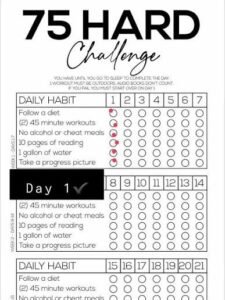
Before jumping in, though, it helps to understand exactly what the 75 Hard Challenge rules involve. The program demands two workouts every day, including one outdoor workout, a chosen diet, a large daily water intake, reading, progress photos, and avoiding alcohol and cheat meals. That is a substantial commitment, particularly for beginners or people with demanding schedules.
This guide breaks down the official-style framework commonly associated with 75 Hard, explains how each rule works, highlights common mistakes, and discusses important considerations before starting. The challenge can be demanding, so the smartest approach is not to begin with blind enthusiasm. It is to understand the rules, plan carefully, and make decisions that account for your individual health and circumstances.
What Is the 75 Hard Challenge?
The 75 Hard Challenge is a structured mental toughness program created around a set of daily non-negotiable tasks completed for 75 consecutive days. Participants are expected to follow every required rule each day. The challenge is widely known for its strict reset policy: if you fail to complete any required task, you start again at day one.
Unlike a traditional workout program, 75 Hard does not give every participant the same exercise routine or meal plan. Instead, it establishes a framework. You choose your diet, select the exercises you perform, and organize the daily requirements around your schedule. That flexibility may sound easier than following a rigid calendar, but it also means you are responsible for making sensible choices.
The challenge demands a significant amount of planning. Two 45-minute workouts require 90 minutes of exercise before you even consider changing clothes, commuting, showering, preparing food, reading, or completing other responsibilities. Add work, family commitments, sleep, and everyday life, and it becomes clear why preparation matters.
For some people, the biggest benefit is not a physical transformation. It is discovering whether they can keep promises to themselves when motivation disappears. Anyone can exercise when the weather is perfect and the schedule is clear. The harder question is whether you can complete your planned activity when it is raining, you are busy, or you simply do not feel like doing it.
The Purpose Behind the 75 Hard Program
The central idea behind 75 Hard is discipline. The program is intended to challenge participants to repeatedly choose action over convenience. Each task is relatively straightforward when viewed alone. Reading ten pages is manageable. Taking a photo takes seconds. Drinking water is simple. Completing all the requirements every day for 75 days is where the difficulty begins.
The program creates what you might call a chain of commitments. One missed link breaks the chain. That structure can appeal to people who feel stuck in cycles of starting and stopping. Instead of constantly negotiating with themselves about whether to exercise or eat according to a plan, they follow a predetermined rule.
Still, discipline should not be confused with ignoring legitimate health concerns. An intense commitment does not automatically suit every person. If you have an injury, chronic condition, a history of disordered eating, or concerns about suddenly increasing your exercise volume, professional medical advice may be appropriate before beginning.
Is 75 Hard a Diet or a Fitness Challenge?
The answer is: neither description tells the entire story. 75 Hard combines exercise, nutrition, hydration, reading, self-monitoring, and behavioral discipline. Physical changes may occur, particularly if participants become more active and change their eating habits, but body transformation is not the only intended outcome.
One person might choose a calorie-controlled nutrition plan and strength training. Another might focus on whole foods, walking, cycling, and mobility exercises. Because the program does not prescribe one universal diet or workout, participants have room to adapt the framework to their preferences.
That flexibility comes with responsibility. Choosing an unnecessarily restrictive diet or combining intense exercise sessions without adequate recovery can create problems. The challenge may be strict, but your approach should still be thoughtful.
The 75 Hard Challenge Rules Explained
The 75 Hard Challenge is built around a set of daily requirements. The key to understanding the challenge is recognizing that the rules work as a package. Completing most of them is not the same as completing all of them under the program’s strict format.
Rule 1: Follow a Diet
Participants choose a diet or eating plan and commit to following it for the full challenge. The original framework does not require one specific named diet, which means the plan can vary depending on individual goals.
For example, someone may choose a balanced whole-food approach, a calorie target designed with professional guidance, or another structured plan that fits their needs. The important part is defining the rules before starting rather than changing the standards whenever temptation appears.
A sustainable approach is generally easier to maintain than an extreme one. If your chosen plan leaves you exhausted, constantly hungry, or unable to enjoy normal social situations, completing 75 days may become unnecessarily difficult. Structure should support your goals rather than create chaos.
Rule 2: Complete Two 45-Minute Workouts Daily
One of the best-known 75 Hard rules is completing two separate 45-minute workouts every day. This means 90 minutes of planned physical activity daily for 75 consecutive days.
The two sessions do not both need to be high-intensity workouts. That distinction matters. A demanding strength session combined with a long walk, yoga session, or another lower-intensity activity may be more manageable than attempting two intense training sessions every day. Recovery, mobility, and sensible programming become essential.
There is also an important separation requirement commonly associated with the challenge: the workouts should be distinct sessions rather than one continuous 90-minute workout split on paper. Plan the timing carefully so you are not scrambling to complete the second workout late at night.
One Workout Must Be Outdoors
At least one of the daily 45-minute workouts must be completed outdoors. Weather does not automatically remove this requirement. That means participants may find themselves walking in rain, exercising in cold conditions, or training outdoors when the temperature is uncomfortable.
Outdoor exercise does not have to mean running. Walking is often the simplest and most accessible option. Depending on your fitness level and local conditions, cycling or other appropriate outdoor activities may also work.
Safety comes first. Severe weather, dangerous heat, poor air quality, lightning, or unsafe conditions should not be treated casually. A challenge is not a reason to knowingly put yourself in danger.
Rule 3: Drink One Gallon of Water
Another famous requirement is drinking one gallon of water per day, roughly 3.8 liters. This is one of the most discussed parts of the challenge because hydration needs vary from person to person.
A fixed water target may not be appropriate for everyone. Factors such as body size, climate, physical activity, diet, medications, and health conditions can affect fluid requirements. Consuming excessive amounts of water too quickly can also be dangerous. Spreading fluid intake throughout the day and seeking individualized guidance when necessary is a more sensible approach than treating a gallon as a universal medical recommendation.
From a practical perspective, participants often use a marked bottle to track their intake. The goal is to avoid reaching late evening and realizing that most of the day’s water still needs to be consumed.
Rule 4: Read 10 Pages Every Day
The challenge requires reading 10 pages of a nonfiction or personal-development book each day. The reading component separates 75 Hard from challenges focused exclusively on diet and exercise.
Ten pages may seem small, but the power lies in repetition. Over 75 days, the daily reading habit can add up to hundreds of pages. The specific book matters less than choosing material that aligns with the program’s intended focus and that you will genuinely engage with.
The reading rule also creates a useful mental transition. After spending much of the day working, exercising, and managing responsibilities, sitting down with a book can become a structured part of your routine.
Rule 5: Take a Daily Progress Picture
Participants take a progress photo every day. The purpose is to create a visual record across the 75 days.
Physical changes can be gradual, making them difficult to notice in the mirror from one day to the next. Looking back at a sequence of photos may reveal changes in posture, body composition, or overall appearance that daily observation misses.
The challenge can also teach an organizational lesson: set a reminder. Forgetting the photo until the next morning may mean the previous day’s requirement was not completed according to the challenge’s strict structure.
Rule 6: No Alcohol or Cheat Meals
The program requires participants to avoid alcohol and cheat meals while following their chosen diet. This rule is another reason participants should define their nutrition plan clearly before beginning.
If your diet rules are vague, it becomes difficult to know what counts as staying on track. Decide what your chosen approach allows and avoid changing the definition simply because a tempting food appears.
At the same time, people should be cautious about developing overly rigid attitudes toward food. If strict food rules are causing anxiety, obsession, or unhealthy behaviors, stepping back and seeking qualified support is more important than preserving a challenge streak.
What Happens If You Miss a 75 Hard Rule?
The challenge is known for its strict reset policy. Under the traditional 75 Hard format, if you miss a required task, you start again at Day 1.
That can happen because of a missed workout, incomplete reading, forgotten progress photo, dietary violation, or another uncompleted requirement. This all-or-nothing system is central to the challenge’s philosophy.
For some people, restarting can reinforce accountability. For others, it may become discouraging. The important thing is to distinguish between the official challenge format and your broader health journey. If you stop or modify the challenge, that does not erase the healthy actions you already completed.
75
How to Prepare for the 75 Hard Challenge
Preparation is almost as important as motivation. Starting on impulse may sound exciting, but a challenge that requires 75 consecutive days of planning benefits from advance organization.
Create a Realistic Daily Schedule
Look honestly at your calendar. Where will the first workout fit? When will you complete the outdoor session? When will you read? How will you handle travel, family events, or busy workdays?
Many participants find that scheduling the first workout early helps prevent the day from becoming overloaded. The second workout can then be placed later, with enough separation between sessions.
Prepare clothing, meals, books, and water-tracking tools in advance. The fewer decisions you need to make when tired, the easier it becomes to stay consistent.
Choose a Sustainable Diet and Workout Plan
The best plan is not necessarily the most aggressive one. Choose activities appropriate for your current fitness level. Walking, strength training, swimming, mobility work, cycling, and yoga can all play different roles in a balanced routine.
Avoid treating every workout as a competition. Your body needs recovery even when the challenge does not include traditional full rest days. Lower-intensity sessions can help manage the overall workload.
A registered dietitian, qualified trainer, or healthcare professional may help you create a plan that matches your health needs.
Common 75 Hard Challenge Mistakes
One major mistake is starting with no schedule. Participants may complete the first few days through excitement, then discover that daily life makes the second workout difficult.
Another mistake is choosing an extreme diet that feels impossible to sustain. The challenge is already demanding. There is little benefit in making nutrition unnecessarily complicated.
People also underestimate recovery. Two daily workouts do not mean every session should be punishing. Mixing intensity levels and paying attention to fatigue can make the routine more manageable.
Finally, do not ignore warning signs. Pain, dizziness, illness, or symptoms that concern you deserve attention. Mental toughness is not the same thing as refusing to respond to a legitimate health problem.
Is the 75 Hard Challenge Safe for Beginners?
The answer depends on the individual. The combination of 90 minutes of daily exercise, strict dietary rules, and a 75-day commitment can be demanding for someone who is currently sedentary.
Beginners may benefit from building a foundation before attempting the complete challenge. Developing a regular walking habit, learning basic strength exercises, and establishing consistent eating patterns can make a future attempt more manageable.
People with medical conditions, injuries, pregnancy, or other health considerations should seek appropriate professional advice before significantly increasing exercise or changing their diet.
Tips to Successfully Complete 75 Hard
Success begins with removing avoidable obstacles. Schedule workouts, prepare meals, keep your book visible, and use reminders for the progress photo.
Choose exercise you can realistically repeat. You do not need to prove your toughness by making every workout miserable. A consistent walk may be more valuable than repeatedly forcing yourself through training that your body is not prepared to handle.
Think one day at a time. Seventy-five days can feel enormous when viewed all at once. Focus on completing today’s responsibilities, then repeat tomorrow.
Conclusion
The 75 Hard Challenge rules are simple to list but demanding to follow. Two 45-minute workouts, including one outdoors, a chosen diet, daily reading, a progress picture, substantial water intake, and no alcohol or cheat meals create a strict 75-day framework built around consistency.
The challenge can appeal to people who want structure and a serious test of discipline, but it is not automatically appropriate for everyone. The smartest way to approach 75 Hard is with planning, realistic exercise choices, sensible nutrition, and attention to your individual health.
If you decide to take on the challenge, prepare before day one. Map your schedule, choose sustainable habits, and understand the commitment you are making. Discipline can be powerful, but lasting fitness is built not only through determination. It is built by finding a way of living that you can support safely and consistently.
Frequently Asked Questions
1. What are the main 75 Hard Challenge rules?
The challenge includes following a diet, completing two separate 45-minute workouts each day with one outdoors, drinking one gallon of water, reading 10 pages, taking a daily progress photo, and avoiding alcohol and cheat meals.
2. Do I have to restart 75 Hard if I miss one task?
Under the traditional 75 Hard rules, yes. Missing a required task means restarting from Day 1.
3. Can beginners do 75 Hard?
Some beginners may be able to participate, but the program can be physically demanding. Building basic fitness first and consulting an appropriate healthcare professional when needed can help determine whether the challenge is suitable.
4. Can both 75 Hard workouts be easy?
The rules focus on completing the required workout duration rather than requiring maximum intensity for every session. However, exercise choices should be appropriate for your fitness level and health.
5. Is 75 Hard a medically designed fitness program?
75 Hard is widely presented as a mental toughness and discipline program rather than a personalized medical or clinical fitness prescription. Individual health needs should always be considered before beginning an intensive routine.